
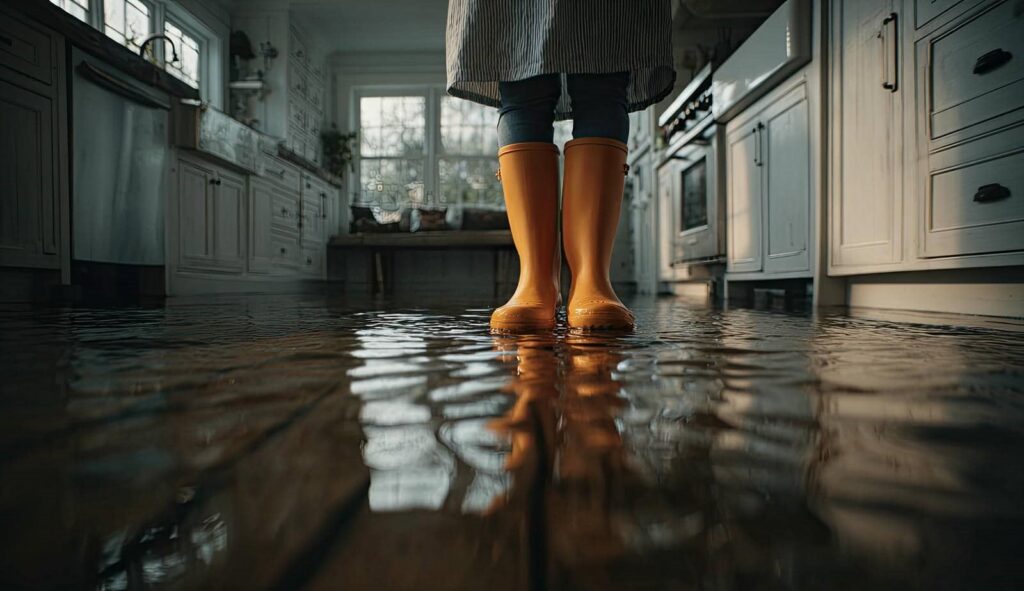
When stormwater leaves your home soaked, how fast can you act before damage spreads? You should move quickly: shut off power if needed, check for gas and structural hazards, remove standing water, and document every affected area for insurance. Then you can discard unsalvageable materials, clean and disinfect surfaces, and watch closely for mold. If the damage is extensive, a restoration pro may be the next critical step.
Key Takeaways
- Shut off power and gas first, then inspect for electrical or structural hazards before entering flooded areas.
- Remove standing water quickly with a pump or wet vac, working from the lowest point toward exits.
- Sort soaked items into salvageable and unsalvageable, and discard nonrecoverable materials like saturated drywall.
- Document all damage with photos and notes before cleanup for insurance claims and recovery records.
- Dry, clean, and disinfect affected areas using fans, dehumidifiers, and proper protective gear to prevent mold growth.
Act Fast After Storm Water Damage
When storm water enters your home, you need to act fast to limit damage and reduce cleanup costs.
Begin water damage after storm cleanup by removing soaked items, opening damp rooms, and mapping every affected area. You should sort materials into salvageable and unsalvageable groups, then move wet textiles, paper, and porous furnishings out of the way.
Use fans and dehumidifiers right away to lower humidity and slow microbial growth. Wipe hard surfaces, extract standing water, and keep affected zones accessible for drying checks.
Document the damage with photos for your records and insurance claims. If you work methodically, you’ll protect your home, support your crew, and rebuild with less stress.
Check for Electrical, Gas, and Structural Hazards
Before you enter the damaged area, you should shut off power at the main breaker and check for exposed wiring, wet outlets, or any signs of electrical arcing.
You should also verify that gas lines, meters, and appliances aren’t leaking or damaged; if you smell gas, leave immediately and call the utility company.
Finally, inspect floors, walls, ceilings, and support members for shifting, sagging, or collapse before you continue cleanup.
Electrical Hazard Checks
After storm damage, you should check for electrical, gas, and structural hazards before you start cleanup.
Turn off power at the main breaker if you can reach it without standing in water. If you can’t access the panel safely, stay out of flooded areas and call your utility provider.
Use a noncontact voltage tester on outlets, cords, and appliances only after surfaces are dry. Look for damaged insulation, scorch marks, tripped breakers, and exposed conductors.
Don’t touch any wet electrical device. Keep extension cords unplugged and separate from damp materials.
If you smell burning or hear buzzing, leave the area and contact a licensed electrician.
When you work together with neighbors and responders, you reduce risk and protect everyone in your home.
Gas And Structural Safety
Once you’ve ruled out obvious electrical dangers, check for gas leaks and structural damage before you enter or start cleanup.
If you smell gas, hear hissing, or notice a dead pilot light, leave immediately and shut off the main supply only if you can do it safely. Don’t use switches, flames, or vehicles near the area.
After a storm, inspect walls, floors, ceilings, and foundations for sagging, cracks, or shifting. Wear sturdy boots and a hard hat, and avoid standing under damaged beams.
If doors won’t close, floors feel soft, or masonry has separated, treat the structure as unstable. Call your utility company, fire department, or a licensed contractor for clearance.
You’re protecting your crew, your home, and your recovery plan by verifying safety first.
Remove Standing Water Quickly
Start by removing standing water as quickly as possible to limit damage and slow mold growth.
Use a submersible pump for deeper water, then switch to a wet vac for shallow puddles. Work from the lowest point toward exits so you don’t trap water behind barriers.
If you have electricity, keep cords elevated and outside wet areas. Wear boots, gloves, and eye protection, because storm water can carry contaminants.
Open doors and windows when conditions are safe to improve airflow while you work.
Remove soaked rugs, boxes, and furniture once you can lift them safely. Check hidden spaces under appliances and inside cabinets, since water often collects there.
You’re not alone in this step; steady, careful action helps your home recover faster and safer.
Take Photos for Your Insurance Claim
Before you move or remove anything, take clear photos of every affected area, including walls, floors, furniture, and damaged contents.
Document all visible damage from multiple angles so your insurer can verify the loss.
Capture these images before cleanup starts, since your records should show the original condition.
Document All Damage
Capture the damage as soon as it’s safe to do so, because clear documentation can support your insurance claim and help track the full extent of storm-related losses.
Use your phone or camera to photograph every affected room, focusing on walls, floors, ceilings, cabinets, outlets, and damaged belongings. Include wide shots for context and close-ups for detail, and note the date, time, and location for each image.
Record visible stains, warping, debris, and standing water, plus any broken materials or displaced items. Keep a written log that matches your photos so you can describe what you see accurately.
Store backups in cloud storage or email them to yourself. When you document thoroughly, you protect your claim and help your recovery team work with confidence.
Capture Before Cleanup
Take photos before any cleanup begins so you can preserve clear evidence for your insurance claim. Use your phone’s timestamp and shoot wide-angle views first, then close-ups of soaked drywall, warped flooring, ruined belongings, and any visible storm entry points.
Keep your framing steady and include room context so adjusters can verify location and scale.
- Photograph each affected room from multiple corners.
- Capture serial numbers, labels, and waterlines on walls.
- Save backups in cloud storage and email copies to yourself.
Don’t move items until you’ve documented them unless they create a safety hazard. Clear images help you prove loss, support faster reimbursement, and stay connected with others recovering after the storm.
Throw Out Damaged Materials and Debris
Once the area is safe to enter, you should remove and discard any materials that can’t be dried and restored, including soaked drywall, insulation, carpeting, and swollen wood.
Use heavy gloves, eye protection, and a mask, then bag smaller debris and place larger pieces in covered bins or curbside piles as local rules allow.
Separate contaminated items from salvageable belongings so you don’t spread mold, sediment, or bacteria through the home.
Cut away torn fabric, warped trim, and crumbling baseboards that trap moisture.
Keep walkways clear for safe movement and faster work.
If your team shares the job, assign one person to haul debris while another checks each room for hidden waste.
Dispose of everything promptly so you can protect your space and move with confidence.
Dry Walls, Floors, and Furniture
Open windows, run fans and dehumidifiers, and move air steadily across the room to dry walls, floors, and furniture as quickly as possible. You’ll protect the structure and shorten recovery when you keep moisture moving out instead of trapping it inside.
Check hidden spaces and lift items so air reaches every side.
Pull furniture away from damp walls and place aluminum foil or wood blocks under legs.
Remove rugs, cushions, and drawers so each piece can dry evenly.
Feel for cool, damp spots and keep airflow on those areas until they match nearby dry surfaces.
If you belong to a team helping one another after the storm, stay consistent and document what dries first.
Prompt drying limits warping, swelling, and lingering moisture that can slow your return home.
Clean and Disinfect Water-Damaged Surfaces
You should remove all contaminated residue from water-damaged surfaces with a detergent solution and clean tools.
Then you can apply a disinfectant that’s rated for the material and follow the label’s contact time exactly.
After treatment, dry the surfaces completely to limit microbial growth and prevent remaining moisture from causing new damage.
Remove Contaminated Residue
Scrub away contaminated residue from water-damaged surfaces as soon as the area is safe to enter, because stormwater and floodwater can leave behind dirt, bacteria, and other hazardous debris.
You’ll help your team restore a cleaner, safer space by removing sludge before it dries and bonds to walls, floors, and fixtures.
- Wear gloves, boots, and eye protection.
- Lift loose debris into sealed bags.
- Wash surfaces with clean water and a stiff brush.
Work from top to bottom so runoff doesn’t recontaminate cleaned areas.
Pay close attention to corners, seams, and textured finishes where grime hides. If residue stays visible, repeat the cleaning pass until the surface feels smooth and looks uniform.
Your careful cleanup protects everyone who shares the space and supports a steadier recovery.
Apply Disinfectant Properly
Mix the disinfectant to the label’s exact ratio, then apply it to clean, nonporous water-damaged surfaces to kill remaining bacteria and reduce the risk of mold growth.
You should use a clean cloth, sponge, or sprayer, and keep the surface visibly wet for the contact time listed on the product label. Work in sections so you can treat every exposed area without missing corners, seams, or edges.
Wear gloves and eye protection, and ventilate the space as you go. Don’t mix products, and don’t use disinfectant on porous materials that can absorb it unevenly.
If you’re caring for your home after storm cleanup, this step helps you protect shared spaces and restore a healthier environment for everyone.
Dry Surfaces Thoroughly
Once the disinfectant’s contact time has passed, dry every cleaned surface completely to limit moisture that can support mold and material breakdown.
You’ll protect your home and help your recovery crew move forward with confidence when you remove lingering dampness fast. Use fans, dehumidifiers, and open windows if outdoor air is dry enough.
Check hidden areas, because trapped moisture often stays in wall cavities, under flooring, and inside cabinets.
- Wipe surfaces with clean, dry towels.
- Run airflow across each room until materials feel dry.
- Verify dryness with touch and, if possible, a moisture meter.
Keep working until readings return to normal and odors fade.
When you dry thoroughly, you join the most effective cleanup path and reduce the chance of repeat damage.
Check for Mold Growth
Check for mold growth as soon as the area is safe to enter, because standing moisture after storm damage can allow mold to develop quickly on walls, flooring, insulation, and other porous materials.
Inspect hidden spots too, including behind baseboards, under sinks, inside cabinets, and along window frames. Look for discoloration, fuzzy patches, musty odors, and damp staining.
If you find mold, limit disturbance so you don’t spread spores through the home. Keep the area ventilated and continue drying any nearby materials that can still be saved.
Wear gloves, an N95, and eye protection when you examine affected surfaces. Take photos and notes so you can track where growth appears.
When you and your household stay alert and methodical, you protect your shared space and reduce avoidable indoor contamination.
Call a Water Damage Restoration Pro
If the damage is extensive, contaminated, or affecting structural materials, call a water damage restoration pro right away.
You’ll get trained support that matches the severity of the loss and helps your home recover faster. A pro can inspect hidden moisture, remove unsalvageable materials, and set up targeted drying equipment with precision.
They assess damage and map affected areas.
They use moisture meters to verify drying progress.
They document conditions for your records and insurer.
This matters when you need clear next steps and a team that knows storm cleanup standards.
Working with a qualified restoration crew keeps you from guessing and helps you feel confident that your space is being handled the right way.
Prevent Future Storm Water Damage
To reduce the chance of repeat storm damage, you need to address both exterior drainage and interior vulnerabilities before the next heavy rain.
Clean gutters, extend downspouts 6 feet or more, and regrade soil so water flows away from your foundation.
Seal cracks in walls, basement slabs, and window frames with appropriate waterproof compounds.
Test sump pumps, install a battery backup, and keep a water alarm near vulnerable appliances.
Inside, move stored items off floors and raise HVAC components if possible.
Inspect roof flashing and replace damaged shingles promptly.
If you live in a storm-prone neighborhood, coordinate with neighbors on shared runoff pathways.
These practical steps help your home stay safer, and they give you a stronger sense of control when the weather turns.
Frequently Asked Questions
How Do I Know if Storm Water Contaminated My HVAC System?
You’ll know storm water contaminated your HVAC if you smell mold, see mud or debris, find wet insulation, or notice corrosion. Check filters, ducts, drain pans, and electrical parts. Have an HVAC pro inspect it.
When Should I Replace Insulation After Flooding?
You should replace insulation immediately after flooding if it’s soaked, compressed, moldy, or contaminated; for example, a storm-drenched basement batts layer won’t dry safely. You’ll protect indoor air and help your home recover faster.
Can I Salvage Electronics After Storm Water Exposure?
Yes, you can sometimes salvage electronics after storm water exposure if you disconnect power, remove batteries, dry them thoroughly, and avoid turning them on. You’ll likely need professional inspection, especially after contaminated water.
How Long Does Storm Cleanup Insurance Usually Take?
Usually, you’ll wait 2-6 weeks, depending on claim complexity and adjuster workload. You should document damage, stay responsive, and keep receipts; otherwise, delays spread like weeds, slowing your payout and your recovery.
What Should I Do With Wet Documents and Family Photos?
You should air-dry wet documents and photos on clean, absorbent paper, then freeze or refrigerate them if you can’t process them quickly. Don’t rub them; separate pages gently and scan copies once they’re stable.
Final Thoughts
When you move fast after storm water damage, you keep the clock from turning a small leak into a costly flood. You check hazards, clear standing water, document losses, and disinfect every affected surface like a surgeon cleaning a wound. If mold appears or damage runs deep, call a restoration pro. Then harden your home against the next storm, so you don’t just recover—you rebuild with confidence and control.