
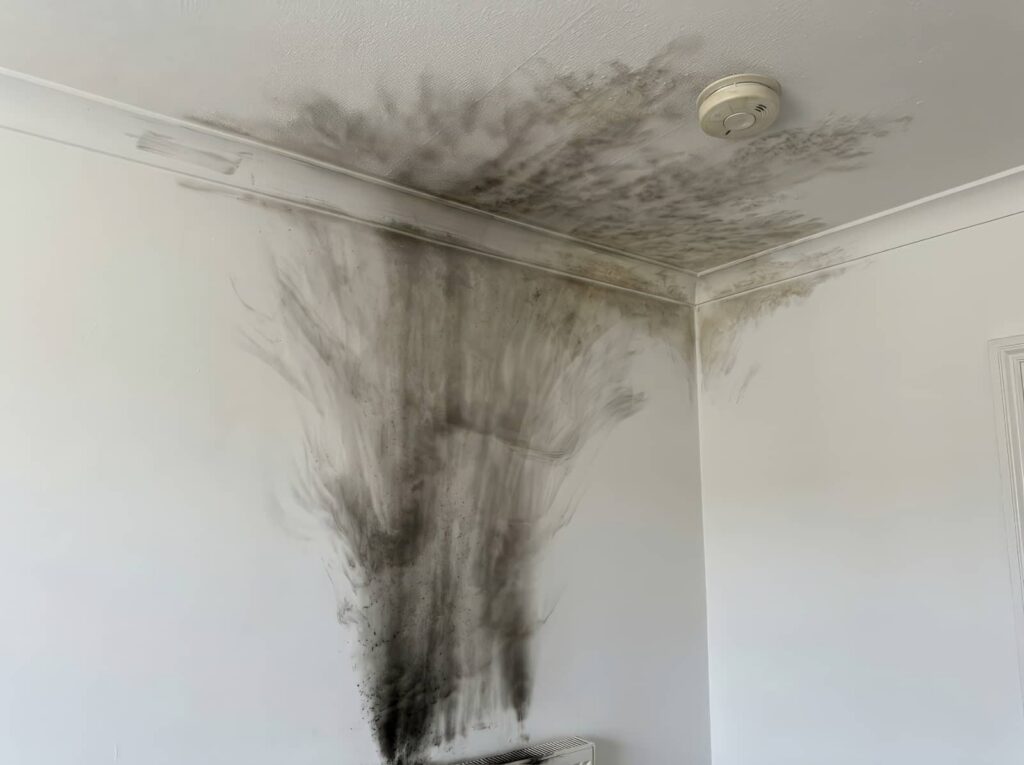
Soot and Smoke Residue Cleanup should begin as soon as possible because soot particles can continue damaging walls, metal, fabrics, and other surfaces after the smoke clears. If you smell smoke or notice a dark film around vents, ceilings, or outlets, act quickly to contain the affected area and prevent residue from spreading. Using the wrong cleanup method can push particles deeper into porous materials and increase exposure risks. Taking the right approach from the start can help protect your property and make the restoration process more effective.
Key Takeaways
- Identify soot early by checking for thin black or brown film, acrid odor, tacky surfaces, and residue around vents, corners, and fixtures.
- Act fast because soot is acidic and fine, causing staining, corrosion, odor retention, and deeper contamination when left in place.
- Before cleaning, turn off HVAC, isolate the room, wear gloves, eye protection, and an N95 or P100 respirator.
- Remove soot safely with HEPA vacuuming and dry cleaning sponges, working top to bottom and avoiding damp rags or household vacuums.
- Call professionals if residue smears, odors persist, irritation continues, or black streaks return, especially near vents or porous materials.
How to Tell if Smoke Residue Is Present
How can you tell if smoke residue is present? You’ll notice thin black or brown films on walls, ceilings, vents, and around light fixtures. Run a white cloth across hard surfaces; if it lifts gray, oily, or powdery marks, residue is likely present.
Pay close attention to corners, HVAC registers, electronics, and cabinets, where particles settle fast. You may also detect a persistent acrid odor, eye irritation, or grime that reappears after wiping.
Smoke residue can discolor plastics, dull metal, and leave tacky patches on painted surfaces. If fabrics smell burnt long after airing out, contamination remains embedded.
Identifying these signs early matters to your household’s safety and supports effective soot and smoke residue cleanup before staining, corrosion, and indoor contamination spread further through shared living spaces.
What to Do Before Cleaning Soot
Once you’ve confirmed smoke residue is present, stop and prepare the area before touching the soot. Turn off HVAC systems so particles don’t circulate through your home. Isolate the room by closing doors and limiting foot traffic.
Put on nitrile gloves, eye protection, and a properly fitted N95 or P100 respirator before entering. Open windows only if outdoor conditions won’t introduce more contaminants.
Next, remove unaffected items nearby and document visible residue with photos for your records. Test structural stability if heat exposure was severe, and shut off power where wiring may be compromised.
Keep children and pets out until hazards are controlled. Gather dry-cleaning sponges, HEPA-filtered equipment, disposal bags, and labeled containers before you begin. Preparation protects your space and keeps your cleanup team aligned, safe, and effective.
Why Does Soot Damage Get Worse Fast?
Because soot particles are acidic, oily, and extremely fine, they start attacking surfaces within hours and spread deeper each time you touch, wipe, or circulate air through the area. They bond to plastics, metals, paint, fabric, and HVAC components, causing yellowing, corrosion, etching, and persistent odor.
You’re not overreacting by moving fast. Heat-altered residues keep oxidizing, and humidity can accelerate chemical reactions that stain finishes and weaken electronics.
Microscopic particles also lodge in pores, seams, and insulation, where they continue contaminating indoor air and irritating lungs, eyes, and skin. The longer soot remains, the harder full restoration becomes and the greater the chance your belongings won’t recover.
Acting quickly protects your home, your health, and everyone depending on you. You’re part of a community that takes contamination seriously and responds early.
How to Clean Soot Without Spreading It
You must remove soot with controlled, dry methods first, or you’ll grind corrosive particles deeper into surfaces.
Use HEPA vacuuming, soot sponges, and proper PPE to contain contamination and prevent residue spread.
If you wipe or spray too soon, you’ll smear the damage, increase staining, and raise cleanup risk.
Safe Soot Removal
When soot settles across walls, ceilings, or contents, treat it as a loose, abrasive contaminant that can spread fast and grind deeper into surfaces if you wipe it the wrong way. You need controlled removal, not aggressive cleaning, because friction drives residue into paint, fibers, and finishes.
Start by wearing gloves, eye protection, and a fitted respirator. Use a HEPA vacuum with a soft brush attachment, holding the nozzle slightly above delicate surfaces.
On walls and ceilings, lift residue with dry cleaning sponges using straight, downward passes. Rotate sponge faces often and replace them once loaded. Don’t use water or household cleaners first; moisture can set staining and create smears.
For upholstery or textiles, test a hidden area, then vacuum gently. If residue is oily or heavy, call trained restoration professionals.
Prevent Residue Spread
Containment matters as much as removal, since loose soot can migrate with a brush stroke, foot traffic, or air movement and contaminate clean areas in minutes. You need to isolate the work zone before touching residue. Close doors, shut down HVAC, and create a clean-to-dirty path so your team doesn’t track particles outward.
- Lay poly sheeting at thresholds like a decon line.
- Use HEPA-filtered vacuums before wiping any surface.
- Fold contaminated cloths inward and bag them immediately.
Work from ceiling to floor and from least damaged areas toward the heaviest deposits.
Don’t sweep, scrub dry, or use household vacuums; they aerosolize soot and grind it deeper into porous materials. When you follow disciplined containment, you protect shared spaces and help everyone recover together, faster.
How to Clean Smoke Residue From Walls
Start by ventilating the area and wearing gloves, eye protection, and an appropriate respirator, because smoke residue can smear easily and may contain harmful particles.
Vacuum loose residue from walls using a HEPA unit and brush attachment, moving top to bottom with light contact. Don’t scrub dry soot.
Next, wipe walls with a dry chemical sponge, again working downward in straight passes.
Replace sponge sections as they darken so you don’t redeposit contamination.
If staining remains, mix a mild degreasing cleaner with warm water, dampen—not soak—a microfiber cloth, and clean small sections with controlled pressure.
Rinse with a separate damp cloth, then dry immediately to limit streaking and paint damage.
If residue persists or walls discolor, call a restoration team. You’re protecting your space the right way.
How to Clean Soot From Other Surfaces
Because soot behaves differently on hard surfaces, fabrics, and porous materials, you need to identify the material before you clean it.
Wear gloves and a respirator, isolate airflow, and work fast to limit cross-contamination in your shared space.
- Glass and metal: Use a dry chemical sponge first, then wipe with a degreasing cleaner until the black film releases.
- Upholstery and curtains: Vacuum with a HEPA machine through a screen, then use a fabric-safe soot remover to lift embedded particles.
- Wood, concrete, and tile grout: Clean with surface-specific solutions and controlled moisture, because porous materials trap acidic residue below the surface.
You protect more than appearance.
You protect indoor air, structural materials, and the people counting on you to restore a safe, livable environment together.
Mistakes That Make Soot Damage Worse
You can make soot damage worse fast if you use improper cleaning methods, especially dry wiping or aggressive scrubbing that grinds oily residue deeper into surfaces.
If you delay residue removal, acidic contaminants can keep etching materials, increasing staining, corrosion, and airborne health risks.
You need to act quickly, use the right cleaning process, and avoid mistakes that spread contamination.
Improper Cleaning Methods
Although soot looks easy to wipe away, improper cleaning methods can grind oily carbon particles deeper into surfaces, spread contamination, and permanently increase staining. If you scrub hard, use water too soon, or vacuum without HEPA filtration, you don’t clean soot—you redistribute it into pores, fabrics, and HVAC pathways.
- A damp rag can smear black residue into paint, grout, and wood grain.
- A household vacuum can blast fine particulates back into your breathing zone.
- Aggressive brushes can scar finishes while embedding acidic residue beneath the surface.
You protect your home and everyone in it by choosing controlled, residue-specific techniques. Work dry first, isolate affected areas, wear proper PPE, and treat soot as a corrosive contaminant, not ordinary dust.
That’s how your team prevents avoidable damage.
Delayed Residue Removal
When soot sits in place, it doesn’t stay neutral—it keeps attacking surfaces, absorbing moisture, and driving acidic contamination deeper into paint, metals, fabrics, and porous materials.
Every hour you wait increases staining, corrosion, odor retention, and cross-contamination. HVAC movement can redistribute particles into rooms you thought were unaffected.
If you delay removal, you give residue more time to bond, smear, and infiltrate hidden cavities. That makes restoration harder, costlier, and less predictable.
You also raise exposure risks for everyone sharing the space, especially anyone with respiratory sensitivity. Your safest move is fast isolation, ventilation control, and professional-grade residue removal before secondary damage accelerates.
Acting quickly protects the structure, protects indoor air quality, and helps your household or team recover together with confidence, safety, and a clear restoration path.
How to Remove Smoke Odors After Cleanup
Three odor-control steps should start immediately after visible residue is gone: remove contaminated air, neutralize odor sources, and isolate materials that still off-gas. You need fast action because smoke molecules keep settling into porous surfaces and can recontaminate clean areas.
- Open cross-ventilation paths and run exhaust fans so stale, acrid air moves out like a gray tide leaving the room.
- Place activated charcoal or baking soda near soft goods, closets, and vents to bind lingering odor compounds.
- Seal washable textiles and removable cushions in bags until you can launder them, preventing that campfire smell from spreading again.
Wear gloves and keep airflow directed outdoors, not into shared spaces.
When you act methodically, you protect your home, your people, and the healthy environment everyone depends on together.
When You Need Professional Soot Cleanup
You need professional soot cleanup when residue keeps spreading, surfaces smear on contact, or HVAC airflow carries fine black particles through your space.
These signs mean contamination is active, corrosive damage can accelerate, and your exposure risk can increase fast.
Experts use controlled removal methods, filtration equipment, and material-specific cleaning protocols that you can’t reliably replicate on your own.
Signs Cleanup Is Urgent
If soot keeps spreading across walls, vents, or electronics, professional cleanup becomes urgent because the residue is acidic, easily airborne, and capable of causing rapid surface damage and wider contamination.
You shouldn’t wait if your space shows escalating signs that contamination is active and moving.
- You see black streaks reappearing after wiping, especially near registers, ceilings, or appliance seams.
- You smell persistent smoke odor in closed rooms, which signals residue embedded in porous materials.
- You notice eye irritation, throat dryness, or visible dust plumes when doors close or fans start.
These warning signs mean soot isn’t settled; it’s circulating through the environment you rely on daily.
Acting quickly helps protect shared spaces, limits corrosive staining, and reduces the chance that contamination spreads deeper into materials and belongings around you.
Why Expert Help Matters
Because soot particles penetrate pores, cling to HVAC pathways, and corrode finishes within hours, expert cleanup matters when contamination has moved beyond a simple surface wipe. You can’t safely remove embedded residue with household tools alone, especially when combustion byproducts may include acids, heavy metals, and ultrafine particulates.
Professionals isolate affected zones, use HEPA-filtered vacuums, dry-cleaning sponges, and controlled chemical methods, and verify that hidden residue isn’t recirculating through your air system.
That protects your lungs, prevents cross-contamination, and limits permanent etching on stone, metal, paint, and electronics. When odors persist, surfaces smear, or residue keeps reappearing, you need a trained team that follows restoration standards.
Acting fast connects you with people who know how to stabilize your space and help everyone return safely together.
How to Prevent Soot and Smoke Residue Later
After cleanup is complete, lock in prevention measures fast to stop fresh soot and smoke residue from bonding to walls, ceilings, and HVAC surfaces.
You protect your space by controlling ignition sources, airflow, and fine-particle entry points immediately. Stay disciplined; your whole household benefits when everyone follows the same safety routine.
- Seal and filter: Replace HVAC filters with high-MERV units, seal duct leaks, and maintain negative pressure during repairs to keep black particulates from recirculating.
- Control combustion: Service furnaces, fireplaces, and appliances yearly so incomplete burning doesn’t release oily residue that clings hard.
- Harden surfaces: Apply appropriate sealers or washable coatings in vulnerable areas, and wipe high-risk zones before residue cures.
You belong in a clean, breathable home, so act early and keep watch daily.
Frequently Asked Questions
Can Soot Residue Affect Electronics Even if They Still Work?
Yes, soot residue can harm electronics even if they still work. You risk corrosion, short circuits, and overheating as conductive particles spread. Act fast to protect your space, your equipment, and everyone relying on it.
Is Soot Cleanup Covered by Homeowners Insurance After a Small Fire?
Yes—your homeowners insurance often covers soot cleanup after a small fire if the damage results from a covered peril. If your kitchen flare-up leaves acidic residue, you’ll need prompt documentation, mitigation, and your adjuster’s approval fast.
How Long Does Soot Residue Remain Hazardous After Smoke Exposure?
Soot residue remains hazardous until you remove it completely; it doesn’t become safe with time alone. You face ongoing inhalation, skin, and corrosion risks, so you should isolate affected areas and start professional cleanup immediately.
Can Pets Be Harmed by Lingering Soot Particles Indoors?
Yes, your pets can be harmed by lingering indoor soot particles; they inhale, ingest, and absorb toxins from contaminated surfaces. You should isolate exposed areas, clean residue fast, and contact your veterinarian if symptoms appear.
Should Air Ducts Be Inspected After Soot Contamination?
Yes—like a telegram, you should inspect air ducts immediately after soot contamination. You protect your household by stopping recirculated particulates, odors, and corrosive residue. You’re not overreacting; you’re following smart, safety-critical indoor air practice.
Summary
Don’t wait and hope the residue fades—it won’t. Soot and smoke particles keep etching surfaces, spreading through air, and worsening odors every hour they remain. If you isolate the area, wear proper protection, and use controlled cleanup methods now, you’ll reduce corrosion, staining, and health exposure. And if the damage looks minor, don’t underestimate it; hidden residue often lingers in walls and vents. Act fast, clean safely, and call a professional when conditions exceed safe handling.