Immediate Water Removal After Storm Events is critical to reducing property damage and preventing mold growth, which can begin within 24 to 48 hours. Start by shutting off electricity if it is safe to do so, stopping the water source where possible, and removing standing water before it penetrates deeper into flooring, walls, and furnishings. Prompt water extraction, thorough drying, and moisture monitoring help minimize structural damage, contamination risks, and insurance complications. Acting quickly after a storm can make the difference between a straightforward cleanup and a much more extensive restoration project.
Key Takeaways
- Shut off electricity if water nears outlets or appliances, and check for sagging ceilings, cracked walls, or unstable floors before entering.
- Stop active stormwater entry by tracing leaks, clearing drains, and using absorbent barriers or sandbags at doors and low openings.
- Remove standing water quickly with pumps or wet vacuums, keeping strainers clear and isolating contaminated debris for safe disposal.
- Dry all affected materials immediately using airflow, dehumidifiers, and disinfection, keeping humidity below 60% to reduce mold growth.
- Photograph damage room by room, save receipts and item details, and call professionals for structural issues, contamination, or hidden moisture.
Check for Electrical and Structural Hazards
Before you start immediate water removal after a storm, check for electrical and structural hazards that could turn a cleanup into an emergency. Shut off main power if water nears outlets, appliances, or extension cords. If you can’t reach the panel safely, stay out and call utility crews. Wear insulated boots and use a noncontact voltage tester before entering wet rooms.
Next, inspect load-bearing walls, ceilings, floors, and stairways for sagging, cracks, bowing, or soft spots. Look for shifted foundations, separated joints, and soaked drywall that could fail without warning.
Don’t work alone; your team keeps watch and confirms safe access points. Mark unstable areas and limit foot traffic. This methodical check protects everyone and makes immediate water removal after storm damage faster, safer, and more controlled for your whole community.
Stop Storm Water at the Source
Once you’ve confirmed the area is safe, stop incoming storm water at its entry point so removal efforts don’t get overwhelmed.
Trace the flow path fast. Check doors, low windows, roof leaks, foundation cracks, garage thresholds, and breached siding. Use towels, absorbent socks, plastic sheeting, plywood, or tarps to divert and block active intrusion.
Work like a response team protecting shared space. Close windows, reset damaged weatherstripping if possible, and wedge barriers tightly against openings.
Clear leaves or debris from nearby drains and downspouts so exterior water can move away from the structure. If water is pushing under a door, build a quick berm with sandbags, dense towels, or bagged soil.
Recheck every few minutes. Stopping inflow now limits spread, protects materials, and helps your next removal steps stay effective.
Decide If You Need a Water Damage Pro
You need to assess storm damage fast, because early water removal limits interior spread and accelerates restoration.
If you see structural sagging, contaminated water, hidden moisture, or water reaching electrical systems, you should call a water damage pro immediately.
These severe damage indicators require specialized inspection, moisture mapping, and extraction equipment you likely don’t have.
Professional Assessment Signs
If stormwater has reached wall cavities, flooring layers, electrical systems, or HVAC components, bring in a water damage professional immediately. You can’t verify hidden moisture migration with surface drying alone, and delays let contamination spread farther into assemblies.
A qualified team uses moisture meters, thermal imaging, and psychrometric readings to map wet zones fast and accurately.
You should also call for assessment when you smell persistent dampness, see uneven drying patterns, notice swelling at trim joints, or can’t trace the full water path. These signs suggest retained moisture beyond what your cleanup can confirm.
Professionals document conditions, classify water exposure, and build a drying plan that protects your home and everyone depending on it. Acting early keeps you aligned with proven restoration standards and strengthens the recovery process for all.
Severe Damage Indicators
When storm damage leaves standing water deeper than a few inches, buckles flooring, collapses drywall, or affects multiple rooms at once, the situation has moved beyond basic cleanup and requires a water damage professional.
These indicators signal hidden saturation, structural instability, and accelerated microbial risk. You shouldn’t rely on fans, mops, or shop vacs alone.
You need expert help if baseboards swell, doors bind, insulation sags, or ceilings stain and soften.
If water reached outlets, HVAC components, or subfloor layers, stop and isolate the area. Immediate water removal limits spread, but severe loss demands extraction equipment, moisture mapping, and controlled drying.
Acting quickly protects your home and keeps your household aligned with proven restoration steps. You’re not overreacting by calling specialists; you’re joining homeowners who respond early, decisively, and safely.
Remove Standing Storm Water Indoors
You need to remove standing storm water indoors as soon as it’s safe, because fast extraction limits interior water spread and reduces secondary damage.
Start with controlled water removal using the right pump, wet vacuum, or extraction tools for the water depth and contamination level.
If you act methodically and contain runoff, you’ll protect adjacent rooms, flooring, and structural materials from further saturation.
Safe Water Extraction
Before extraction starts, shut off electricity to affected rooms and isolate the area, because standing storm water can carry current, sewage, and debris.
Put on waterproof gloves, boots, eye protection, and an N95 or better respirator before you enter. Test depth and stability from the doorway. If water reaches outlets, wiring, or appliances, wait for licensed clearance.
Use a submersible pump for deep pooling and a wet vacuum for shallow residue. Position discharge hoses to approved exterior drainage points away from the structure.
Work in controlled passes, removing water from the lowest point first. Monitor pump strainers for sediment, nails, and organic matter that can jam flow.
Bag contaminated debris immediately. As a prepared, safety-first team, you’ll protect everyone inside and keep extraction efficient, compliant, and disciplined.
Prevent Interior Spread
Two priorities govern interior spread control: remove standing storm water fast and stop it from migrating into clean, dry zones. You need a containment mindset immediately. Shut interior doors, isolate traffic paths, and place absorbent barriers at thresholds to block lateral movement.
Start extraction at the deepest pooling, then work outward so you don’t drive water farther across flooring systems.
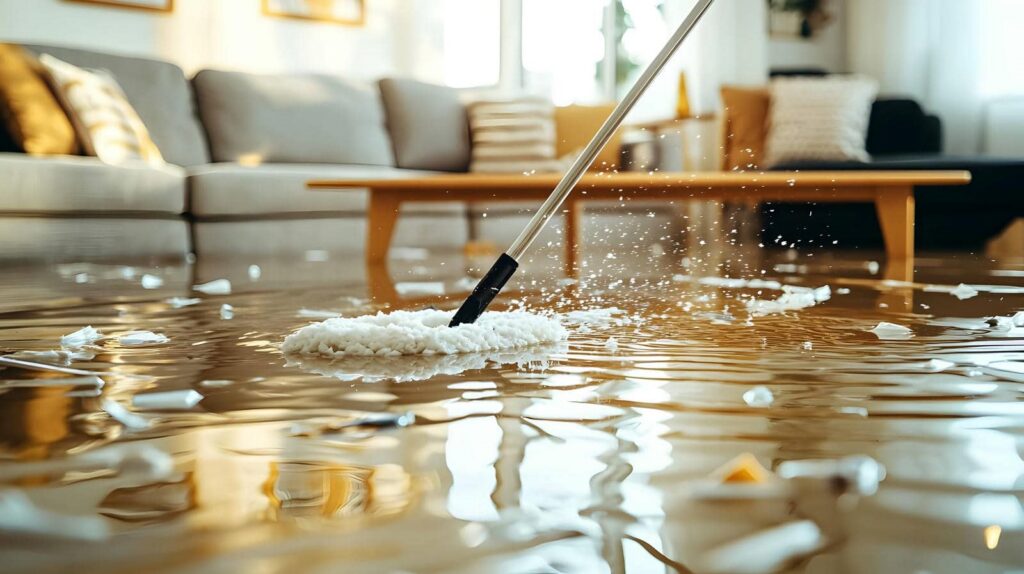
Next, lift wet rugs, move furniture onto blocks, and remove saturated textiles before they wick moisture into adjacent rooms. Use mops, wet vacs, and towels in sequence to capture residual water along baseboards, corners, and low spots.
If water reached wall cavities, open access points early. You’re protecting the whole structure, not just one room, and that disciplined response keeps your household aligned, safer, and easier to restore together.
Dry Wet Floors, Walls, and Furniture
Start drying all wet floors, walls, and furniture as soon as standing water is removed, because every hour of delay lets moisture migrate deeper into materials and expands interior damage.
You should open windows when conditions allow, run air movers across surfaces, and position dehumidifiers to pull vapor from the room.
Lift rugs, separate cushions, and move furniture away from walls so air reaches hidden damp zones. Wipe down hard surfaces, extract water from carpet and upholstery, and remove wet items that block airflow.
Check baseboards, subfloors, drywall, and wood furniture for trapped moisture with meters if available. Work room by room, document what you’ve dried, and stay consistent.
When you act quickly and systematically, you help protect your shared space and keep restoration moving forward together, with confidence.
Prevent Mold After Storm Damage
Once you’ve removed standing water and begun drying, your next priority is stopping mold before it takes hold. You need to lower indoor humidity fast, ideally below 60 percent, because mold can colonize damp materials within 24 to 48 hours.
Run dehumidifiers continuously, increase airflow with fans, and open cavities only when professionals confirm it’s safe.
Disinfect wet structural surfaces with appropriate antimicrobial products approved for storm-related contamination. Focus on porous materials, hidden corners, subfloors, and wall assemblies where moisture lingers unnoticed.
Use moisture meters, not guesswork, to verify drying progress and identify remaining wet zones.
You’re not tackling this alone; this is where disciplined action protects your home and everyone depending on it. Fast, coordinated drying keeps your recovery on track and reduces long-term interior damage.
Clean and Separate Salvageable Belongings
While your structure continues drying, sort belongings immediately into salvageable, questionable, and discard categories to limit cross-contamination and prevent additional water spread.
Wear gloves, isolate porous items, and move wet contents onto clean tarps or racks so air reaches all surfaces.
Rinse nonporous belongings with clean water, then wash with mild detergent. Dry them fast using fans and dehumidifiers.
Bag contaminated textiles separately. Keep damp paper, photos, and books apart from muddy items, and interleave absorbent sheets if possible.
Test furniture joints, veneers, and cushions; if they stay swollen, unstable, or odorous, remove them from occupied areas.
You’ll protect your household best by creating order now: one clean zone, one evaluation zone, and one disposal zone. That system keeps everyone aligned, safer, and moving forward together.
Document Water Damage for Insurance Claims
Take three quick passes with your phone or camera before cleanup shifts the evidence: wide shots of each room, mid-range views of damaged areas, and close-ups of water lines, soaked materials, and affected belongings. Capture timestamps, serial numbers, and flooring changes so your record shows scope, location, and probable water path.
Next, build a room-by-room inventory. List item descriptions, estimated age, purchase dates, and replacement costs. Save receipts, warranty records, contractor notes, and emergency mitigation invoices in one shared folder.
If you discard unsalvageable materials, photograph them first, then note why removal couldn’t wait. Report the loss to your insurer fast, and document every call, claim number, email, and adjuster instruction.
Clear records help your community of contractors, carriers, and family move together with fewer disputes and delays.
Frequently Asked Questions
How Quickly Should Storm Water Be Removed to Minimize Interior Damage?
You should remove storm water immediately—ideally within hours, never beyond 24–48 hours—to limit absorption, swelling, and mold growth. You protect your space fastest by extracting water at once and joining a proven restoration response.
Can Storm Water Contamination Affect Clothing, Toys, or Children’s Items?
Yes—like a toxic hitchhiker, storm water can contaminate your clothing, toys, and children’s items with bacteria, chemicals, and sewage. You should isolate affected belongings, avoid contact, and have porous items professionally discarded or replaced.
Will Homeowners Insurance Cover Immediate Storm Water Removal Costs?
Yes, your homeowners insurance may cover immediate storm water removal costs if a covered peril caused the intrusion; you should verify exclusions, document damage fast, and contact your insurer immediately so your restoration team can mobilize.
What Health Symptoms Can Result From Exposure to Storm Water Indoors?
Within 24–48 hours, mold can grow indoors. You may develop coughing, wheezing, eye irritation, rashes, headaches, nausea, and infections from bacteria or chemicals in storm water. You should act fast to protect your household.
How Can Businesses Reduce Downtime After Interior Storm Water Damage?
You reduce downtime by extracting water immediately, isolating affected zones, documenting losses, and deploying restoration teams fast. You protect operations, prevent contamination spread, and help your business recover efficiently while keeping your staff aligned.
Final Thoughts
Act fast after a storm. You’ll limit interior damage when you check hazards, stop incoming water, remove standing water, and dry every surface without delay. Keep humidity below 60%, separate salvageable items, and document losses for your claim. If damage is extensive, call a qualified water damage pro immediately. Treat moisture like an uninvited thief—it steals structure, air quality, and time. Your methodical response now can sharply reduce repair costs and prevent mold from taking hold.