When you’re managing fire damage cleanup for a commercial property, your recovery plan has to start with a fast, controlled assessment of structural loss, smoke impact, and salvageable assets. You need to secure the site, contain secondary damage, and coordinate remediation before normal operations can resume. The real challenge is building a sequence that protects people, limits downtime, and aligns repairs with business priorities, because the next decisions determine how quickly you recover.
Key Takeaways
- Assess fire, smoke, soot, heat, and water damage before cleanup to identify safe areas and salvageable materials.
- Secure the site immediately by boarding openings, locking access, and restricting entry to unstable or hazardous zones.
- Remove soot and odors with HEPA vacuuming, chemical sponges, pH-balanced cleaners, and air scrubbers with carbon filtration.
- Coordinate cleanup and repairs by zone, verifying safety, ordering materials, and documenting progress daily.
- Build a recovery plan that prioritizes safety, critical operations, roles, insurance steps, and business continuity.
Assess Fire Damage Before Cleanup Starts
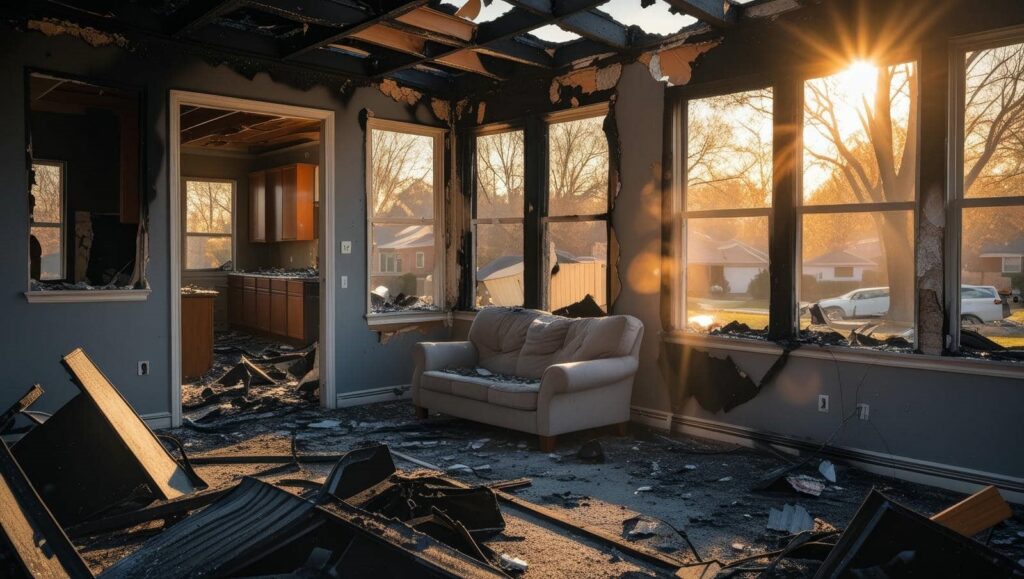
Before cleanup begins, you need a full assessment of the fire damage to determine what areas are safe to enter, what materials are salvageable, and what cleanup methods are required. You document structural impact, smoke penetration, heat distortion, and water intrusion so your team can plan efficiently.
During fire damage cleanup for commercial property, you also identify affected finishes, equipment, inventory, and hidden residues that may worsen corrosion or odor if left untreated. A precise evaluation helps you prioritize tasks, estimate scope, and communicate clearly with stakeholders who’re counting on a steady recovery.
When you understand the condition of each zone, you can select appropriate containment, cleaning agents, and restoration strategies. That clarity supports your crew, protects assets, and helps your business return to normal faster.
Secure the Site and Stop Further Damage
Once you’ve assessed the fire damage, secure the site immediately to prevent theft, exposure, and additional structural loss.
You should board broken openings, lock intact access points, and post clear hazard notices for staff, contractors, and inspectors.
Shut off utilities only through qualified personnel so you don’t create electrical, gas, or water hazards.
If the structure is unstable, establish exclusion zones and restrict entry to authorized responders.
Document conditions before and after you stabilize the perimeter, since accurate records support insurance, compliance, and recovery planning.
Coordinate with your cleanup team so everyone follows the same access controls and safety rules.
When you take these steps fast, you protect your property, reduce liability, and keep your recovery team aligned around a secure, professional worksite.
Remove Fire Smoke, Soot, and Odors
With the site secured, you can begin removing fire smoke, soot, and odors from the affected areas.
You should start with targeted HEPA vacuuming to lift dry soot without spreading residues, then use chemical sponges and pH-balanced cleaners on hard surfaces.
Clean top to bottom so particles don’t redeposit on finished areas. For porous materials, apply approved extraction methods and replace items that’ve absorbed contaminants beyond recovery.
Use air scrubbers with activated carbon to capture airborne particles and neutralize lingering smells.
You’ll also need to manage humidity and airflow to limit odor retention.
Document each cleaned zone, verify surfaces are residue-free, and keep your team aligned on entry controls and safety protocols.
This systematic approach helps your facility recover faster and return with confidence.
Coordinate Cleanup and Repairs
As cleanup progresses, you should coordinate repairs in parallel so structural, mechanical, and finish work can start as soon as affected areas are cleared. You’ll keep crews aligned, reduce idle time, and support a smoother return to service.
Verify which rooms are safe for repair access
Sequence demolition, drying, and reconstruction by zone
Confirm material orders before removal is complete
Share daily updates with contractors and building staff
Document completed work and any changes immediately
You should match each trade’s schedule to the actual condition of the site, not assumptions.
When you keep communication tight, your team stays synchronized, protected, and ready to move forward together.
Create a Recovery Plan for Your Business
Create a recovery plan that prioritizes safety, restores critical operations first, and assigns clear responsibilities for every phase of the response.
You should document hazards, contact lists, vendor agreements, insurance steps, and decision thresholds before fire damage cleanup begins.
Define who authorizes entry, who verifies structural stability, and who tracks smoke damage remediation, so your team moves with confidence.
Build a restoration sequence that protects data, equipment, inventory, and customer service channels in that order.
Set target timelines, backup locations, and communication protocols for employees and tenants.
After each milestone, review progress, update costs, and adjust resources to reduce downtime.
When your people know their roles, your business can recover faster and stay connected through a coordinated, professional response.
Frequently Asked Questions
How Do I Document Fire Losses for Insurance Claims?
You document fire losses by photographing damage, listing affected assets, saving receipts, and noting dates, times, and repair estimates. You should file a detailed inventory and submit it promptly to your insurer.
What Permits Are Needed Before Commercial Fire Restoration Work Begins?
You’ll usually need building, demolition, electrical, plumbing, and mechanical permits, plus fire department approval when systems or hazards’re involved. Check local codes first, because you’ll prevent delays and keep your restoration team compliant.
How Can I Protect Digital Records After a Fire?
You can protect digital records by disconnecting devices, backing up intact data, documenting damage, and using certified recovery experts. Remove wet media fast, seal drives, and store them properly—one delay can feel catastrophic, risking everything.
When Should Employees Return After Fire Cleanup?
You should return only after authorities clear the site, air tests confirm safe conditions, and your employer verifies utilities, structural integrity, and cleanup completion. Don’t reenter early; it can expose you to smoke, toxins, or hidden hazards.
What Safety Training Do Staff Need During Restoration?
You need hazard communication, PPE use, smoke exposure, asbestos awareness, electrical lockout, confined-space rules, and evacuation drills. Training is your safety net, keeping your team aligned, protected, and confident while restoration work continues.
Recap
When you approach fire damage cleanup methodically, you protect your property, your people, and your timeline. You assess hazards, secure the site, remove smoke, soot, and odors, and coordinate repairs without delay. Then you build a recovery plan that defines roles, vendor support, and resource needs. This process keeps your business moving with the speed of lightning and reduces costly interruptions. With a clear plan, you can restore operations safely and efficiently.