
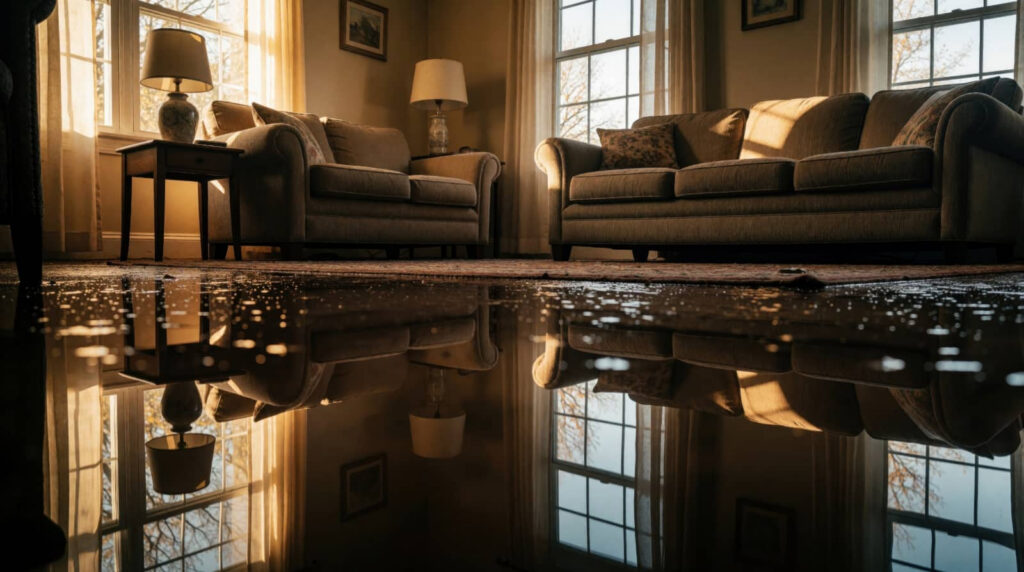
After a major flood, the first hours can decide how much of your home you’ll save. You’ll start with a safety check, then technicians map the water spread, extract standing water, and set a drying plan with dehumidifiers and air movers. They’ll also monitor moisture closely, because hidden damp areas can turn into mold fast. What gets kept, cleaned, or replaced depends on one key assessment that comes next.
Key Takeaways
- Restoration starts with inspection, moisture mapping, and documentation to identify all affected areas and materials.
- Technicians extract standing water, then use dehumidifiers and air movers to dry the structure quickly.
- Home safety comes first by shutting off utilities, checking for hazards, and wearing protective gear.
- Salvageable materials are cleaned and dried, while porous or contaminated items like drywall and carpet are often removed.
- Continuous monitoring of humidity and moisture levels helps prevent mold and ensures proper drying.
What Happens During Flood Damage Restoration?
Flood damage restoration begins with a careful inspection to identify how far the water has spread, what materials are affected, and whether any hazards like contaminated water or electrical issues are present.
Next, you’ll see technicians document damage, map moisture, and create a drying plan that fits your space. They’ll remove standing water, extract trapped moisture from carpets and subfloors, and set up dehumidifiers and air movers to control humidity.
Throughout the process, they’ll monitor readings to confirm materials are drying at the right rate. If you’re wondering how flood damage restoration works, it’s a coordinated sequence that limits secondary damage and protects your home’s structure.
You’re not dealing with this alone; a trained crew guides each step with clear communication and steady, practical care.
How to Make Your Home Safe First?
Before you enter, shut off electricity, gas, and water at the main controls if you can do it safely.
Check for structural hazards like sagging ceilings, cracked walls, or unstable floors, and don’t go inside if you suspect a collapse risk.
Wear protective gear such as boots, gloves, and a mask to reduce exposure to contaminated water, sharp debris, and airborne mold.
Shutting Off Utilities
If water is still rising or has already reached electrical outlets, cut power at the main breaker if you can do so safely, then shut off gas and water to reduce the risk of fire, electrocution, and further property damage.
Use a flashlight, not candles, and keep your hands dry while you work. If the breaker panel is in standing water, stop and wait for a licensed electrician or utility worker.
For gas, close the main valve only if you can reach it without entering hazardous water or debris.
Turn off the water supply at the meter or main shutoff to limit flooding from broken pipes.
These quick actions help protect your home and give your restoration team a safer starting point. You’re taking the right first steps now.
Checking Structural Hazards
Once the utilities are shut off, your next priority is to check for structural hazards before you go farther into the home.
Stay outside if you notice sagging roofs, bowed walls, cracked foundations, or floors that feel soft or uneven. Water can weaken framing fast, so test each step with care and stop if anything shifts or creaks.
Look for displaced beams, hanging debris, and broken glass around entryways. If doors or windows jam, the structure may have moved. Don’t force access.
Mark dangerous areas and keep everyone away until a qualified inspector clears them. When you move slowly and watch for warning signs, you protect your home and help your restoration team start with confidence, just like other homeowners doing the same thing.
Wearing Protective Gear
Even after the structure looks stable, you still need to protect yourself with the right gear before you step inside. Put on waterproof boots, thick gloves, long sleeves, eye protection, and a respirator rated for mold and fine particles.
Floodwater can carry sewage, chemicals, broken glass, and bacteria, so don’t rely on luck or bare hands. If you’re working with a team, make sure everyone wears the same basic protection and checks each other for tears, leaks, or fit issues. Tape gloves to sleeves if needed, and change anything soaked or contaminated right away.
Keep a first aid kit nearby, and wash exposed skin with soap and clean water after you leave. When you gear up properly, you’re protecting yourself and helping the whole crew stay ready.
How Pros Remove Flood Water Quickly
Professionals remove flood water quickly by combining powerful extraction equipment, moisture mapping, and a clear drying plan.
You’ll see truck-mounted vacuums, portable pumps, and weighted wands pull standing water from floors, carpets, and hidden cavities fast. They trace moisture with infrared cameras and meters, so they know where water’s lingering and where airflow needs to go.
Then they set up air movers and dehumidifiers in the right pattern to keep evaporation moving. You stay in the loop with clear updates, because fast action matters and you’re part of the recovery team.
Crews also monitor humidity and surface readings, adjusting the setup until conditions drop to safe drying levels. That disciplined approach limits downtime, protects the structure, and helps your home get back to normal sooner.
What Gets Salvaged and What Gets Replaced
After the water is out, technicians sort materials by how fast they soaked up moisture, how contaminated they are, and whether they can be dried to safe levels.
You’ll usually keep structural framing, subfloors, and solid wood if they haven’t warped or broken apart. Metal fixtures, tile, stone, and some appliances may also be salvaged after cleaning and testing.
Porous items like carpet, pad, insulation, ceiling tiles, and damaged drywall often get removed because they hold water and lose strength quickly. Upholstered furniture, particleboard cabinets, and paper-backed wall coverings can also fail.
Your restoration team checks each item against safety, cost, and repair time, then explains the call so you’re not left guessing. That process helps your home move forward with confidence, and you’ll know your crew is protecting what still makes sense to save.
How Flood Damage Restoration Prevents Mold
Mold starts quickly in damp materials, so flood damage restoration focuses on drying, cleaning, and removing anything that can’t be dried safely.
You protect your home by lowering moisture fast with air movers, dehumidifiers, and controlled ventilation. Technicians check hidden cavities, baseboards, and insulation, because trapped water keeps spores active.
You’ll also see surfaces cleaned and sanitized to reduce organic residue that mold feeds on. Porous items that stay wet too long usually get removed, which stops growth before it spreads.
Throughout the process, moisture readings guide every step, so you’re not guessing. When you act early and work with a trained team, you give your property the best chance to stay healthy, stable, and ready for repairs.
What to Expect Before Repairs Are Done
Before repairs start, you’ll get an initial damage assessment to identify what’s affected, what can be saved, and what needs replacement.
The restoration team will also run safety checks first, since hidden hazards like electrical issues, unstable materials, and contamination can make the area unsafe.
This step helps you know what to expect and lets the work move forward in a controlled, practical way.
Initial Damage Assessment
A thorough initial damage assessment helps you understand the full scope of flood damage before repairs begin.
You’ll usually walk through the property with a restoration professional who documents visible impacts, measures moisture levels, and maps affected rooms, materials, and contents.
This step lets you see which areas need drying, cleaning, removal, or later rebuilding. You can expect photos, notes, and equipment readings to guide the plan, so nothing gets missed.
The goal is to create a clear picture of what’s salvageable and what’s not, giving you confidence in each next move.
When your team explains findings in plain terms, you stay informed and connected to the process, not left guessing.
Safety Checks First
Once the damage assessment is complete, safety checks come next to make sure the property’s environment is stable enough for restoration work.
You’ll see technicians verify power shutoff, test for gas leaks, and confirm structural stability before anyone enters deeper areas. They also watch for contaminated water, hidden mold, and unsafe debris so you’re not exposed to avoidable hazards.
- Confirm utility isolation
- Inspect floors, walls, and ceilings
- Measure air quality and moisture
- Mark unsafe zones clearly
These steps protect you, your family, and the crew while keeping the process moving.
When the site passes inspection, you can feel confident your restoration team is ready to begin repairs safely and efficiently, with your home’s recovery as the priority.
Frequently Asked Questions
How Long Does Flood Insurance Typically Take to Process Claims?
Flood insurance claims usually take 30 to 60 days, though you’ll get faster results if you submit photos, receipts, and paperwork promptly. You can speed things up by staying organized and responsive.
Can Flood-Damaged Electronics Ever Be Safely Restored?
Yes, you can sometimes restore flood-damaged electronics if you power them off, dry them thoroughly, and clean corrosion quickly. You’ll need inspection, component testing, and professional repair, because hidden damage can linger.
Which Documents Should I Save for Restoration and Insurance Records?
Save your insurance policy, photos, videos, receipts, contractor estimates, repair invoices, cleanup logs, and correspondence. You’ll strengthen claims, track losses, and stay organized. Keep copies both digitally and on paper for easy access.
How Do Restoration Teams Handle Contaminated Floodwater?
You’ll see them treat it like a hostile tide: they isolate the area, wear full PPE, pump out sewage water, disinfect surfaces, remove porous materials, and test until your space’s safety feels restored.
What Permits Are Needed Before Rebuilding After Severe Flooding?
You’ll usually need building, electrical, plumbing, and zoning permits, plus floodplain approvals. You should check with your local building department first, then submit plans. They’ll guide you, and you won’t rebuild alone.
Final Thoughts
When flood damage restoration wraps up, you can feel the weight lift as the space dries out like a storm cloud breaking apart. Technicians have removed water, tracked moisture, and protected salvageable materials with care. By keeping humidity in check and watching for hidden dampness, they help shut the door on mold before it starts. Once the home is stable, you’re ready for repairs that can bring everything back under one solid roof.