
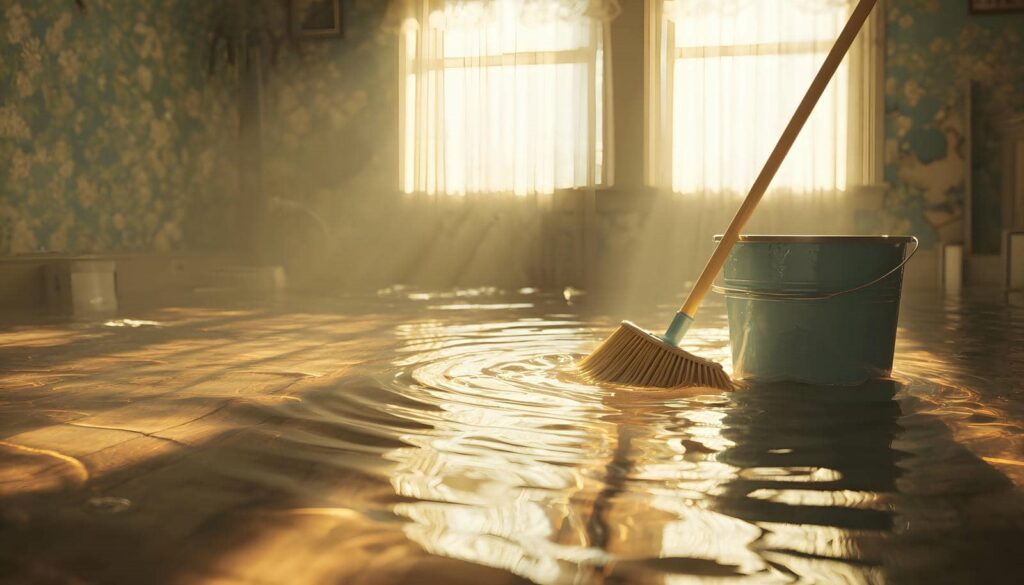
When a leak turns your floor into a mirror, you need to move fast. Shut off the main water supply, cut power to wet areas, and clear out anything valuable before the damage spreads. Then remove standing water, protect floors and walls, and push air through the space so moisture doesn’t settle in. If water has reached insulation or drywall, you may need pros—but the next step can make all the difference in an emergency water cleanup after leak.
Key Takeaways
- Shut off the main water supply and electricity immediately to stop further damage and reduce shock risk.
- Remove valuables, furniture, rugs, and pets from the wet area, then document damage with photos.
- Use towels, mops, pumps, or a wet/dry vacuum to remove standing water quickly.
- Open windows, run fans, and use a dehumidifier to dry the area and prevent mold growth.
- Call water damage professionals if water entered walls, insulation, or hidden spaces.
What To Do First After A Water Leak
First, shut off the water source if you can do so safely, then cut power to any affected area to reduce shock risk.
Next, confirm the leak’s source and protect yourself with gloves and closed-toe shoes. Move pets and people out of the wet zone, and keep everyone together so nobody slips or contacts energized materials.
Document visible damage with quick photos for insurance and your repair team. If water is entering from a fixture, isolate that line if you know how.
Call a plumber or restoration pro right away, because emergency water cleanup after leak damage works best when you act fast.
Keep doors open for airflow, but don’t start tearing out materials yet.
Stay calm, stay coordinated, and make each step count.
Remove Standing Water Right Away
Stop the water spread right away so it doesn’t soak farther into floors, walls, and baseboards.
Use pumps or a wet vac to remove standing water as fast as possible, and clear flooded items from the area immediately.
Every minute you wait increases material damage and slows restoration.
Stop Water Spread Quickly
Move fast to remove standing water before it spreads into adjacent rooms, baseboards, and porous materials. You need to contain the leak zone immediately so the water doesn’t keep traveling through seams, thresholds, and floor edges.
Shut doors, place absorbent barriers at openings, and lift lightweight furniture, rugs, and electronics out of the wet path. If you’re working with a team, assign one person to guard clean areas while others focus on the wet zone.
Check under cabinets and along trim for hidden migration, because small gaps can move a lot of water. The quicker you isolate the affected space, the better your cleanup outcome will be.
You’re not handling this alone; a fast, coordinated response helps your whole space recover with less damage and less stress.
Use Pumps Or Wet Vacuums
Use pumps or a wet vacuum right away to pull out standing water before it soaks deeper into subfloors, insulation, and wall cavities. You’ll cut off the moisture source that keeps damage growing and give your cleanup crew a better shot at fast recovery.
Set the pump at the lowest point, keep discharge lines clear, and monitor the flow so it doesn’t back up. If you’re using a wet vac, empty it often and move methodically across the wet zone.
Stay alert around outlets and extension cords, and shut off power if water’s near them. The sooner you remove pooled water, the less chance you’ve got of swelling, delamination, and hidden dampness.
Work together, stay focused, and move quickly.
Clear Flooded Items Fast
Get flooded items out of the way fast so standing water can’t keep wicking into carpets, pads, furniture, and stored materials. You should move boxes, rugs, chairs, and electronics to a dry zone immediately, then sort salvageable items from soaked ones.
Don’t stack wet materials; spread them out so air can reach all sides. If you can, place plastic blocks or foil under legs to limit transfer into flooring.
Label damp contents and keep them together so your cleanup team can track what needs drying, cleaning, or disposal. This fast triage protects your space, reduces hidden damage, and helps your crew work as one.
Act now, stay organized, and keep the whole recovery moving before moisture spreads deeper.
Protect Floors, Walls, And Belongings
You need to protect flooring immediately by placing barriers, lifting wet rugs, and removing soaked materials before moisture spreads.
Shield walls and baseboards with drying equipment and absorbent wraps so water doesn’t wick upward and cause hidden damage.
Move belongings to a dry area now, and keep them elevated and separated to limit loss and speed restoration.
Protect Flooring Quickly
Move fast to protect flooring as soon as a leak is discovered, since standing water can seep into carpet, warp wood, and damage subfloors. Shut off the source, then pull up rugs, mats, and loose runners so moisture doesn’t trap underneath.
If you can, lift furniture feet onto plastic blocks or foil to reduce contact with wet surfaces. Use towels, a wet vacuum, or a squeegee to remove visible water from hard floors right away.
On carpet, blot, don’t scrub, and keep traffic off the area to limit fiber damage. Open doors for airflow, but keep the focus on the floor zone.
Acting together in the first minutes helps your space dry faster, lowers repair costs, and keeps your home’s shared areas usable and safe.
Safeguard Walls And Belongings
Once the floor is under control, turn to the walls and nearby belongings before moisture migrates higher or spreads into stored items.
Pull furniture away from wet drywall, lift boxes, and inspect baseboards, trim, and outlets for dampness. You’ll want to remove photos, books, electronics, and textiles fast; each minute counts.
Wipe surfaces with clean towels, then set fans to move air across the wall face, not straight into soaked cavities. If paint bubbles, mark the area and keep monitoring for expansion.
Bag small valuables in dry containers so they stay part of your safe space, not the damage. Use plastic sheeting only as a temporary shield, and never trap wet materials against the wall.
Quick action protects your belongings and speeds restoration.
Dry The Room Before Mold Starts
Drying the room quickly is critical because standing moisture can trigger mold growth in as little as 24 to 48 hours. Open windows if outdoor air is dry, and run fans so air moves across wet surfaces, not just in circles.
Set a dehumidifier in the center of the room and keep doors open to improve airflow. Remove soaked rugs, curtains, and cushions so hidden moisture can’t linger.
Wipe baseboards, window frames, and corners with clean towels, then replace saturated towels often. Check behind furniture and under sinks, because trapped dampness invites odor and spores.
You’ve got this—fast, steady drying protects your space and helps your home feel safe again. Keep monitoring humidity until materials feel dry and the room stays comfortably crisp.
When To Call Water Damage Pros
If water has soaked into walls, ceilings, flooring, or insulation, call water damage pros right away because hidden moisture can spread fast and cause structural damage.
You don’t need to guess when the damage is beyond a mop and fan; you need trained help when water reaches cavities, subfloors, or electrical areas.
Pros use moisture meters, thermal imaging, and extraction equipment to find what you can’t see. They move quickly, so you can get back to normal with your people.
- Call if water keeps returning after cleanup.
- Call if materials feel soft, warped, or swollen.
- Call if you smell dampness after drying.
Fast action limits repair scope and protects your home’s core. You’re not overreacting—you’re staying ahead of it.
Prevent Future Water Damage
To prevent future water damage, you need to fix the source, not just the symptoms. Inspect supply lines, shutoff valves, appliance hoses, and roof penetrations after every leak, then replace worn parts before they fail.
Seal gaps around windows, tubs, and plumbing fixtures with the right caulk or gasket. Keep gutters clear and direct downspouts away from the foundation so water can’t pool near your home.
Install leak sensors under sinks, behind toilets, and near water heaters for early alerts. Test your sump pump and backflow preventer on a set schedule.
If you live with these risks daily, you’re part of a smart, proactive crew that protects the whole space. Quick maintenance now stops costly damage later and keeps cleanup from becoming a repeat emergency.
Frequently Asked Questions
How Do I Know if the Leak Is From Plumbing or Roofing?
Check where water appears: plumbing leaks usually show near pipes, fixtures, or inside walls after use; roofing leaks track from ceilings, attics, or storm exposure. You can test fixtures, inspect attic stains, and call pros fast.
Can I Stay in the House During Emergency Water Cleanup?
Maybe—if you’re not facing mold, electrical risk, or heavy demolition, you can stay. You’ll need clear, dry zones, good ventilation, and crew access; otherwise, leave quickly and protect yourself.
Does My Insurance Usually Cover Sudden Water Leak Damage?
Usually, yes—if you’ve got sudden, accidental leak damage, your policy often covers it. You should review exclusions, document the loss, and call your insurer fast so you can start cleanup and limit further damage.
What Items Should Be Discarded After Water Exposure?
You should discard soaked drywall, insulation, carpets, paper, and food. About 48 hours of moisture can trigger mold growth, so act fast. If items smell musty, warp, or stain, you’ve got to toss them.
How Long Does Water Cleanup Typically Take?
You’ll usually finish water cleanup in 1 to 3 days for minor leaks, but severe damage can take a week or more. You should act fast, remove standing water, dry materials, and monitor moisture.
Conclusion
When a leak hits, act fast: shut off the water, kill power to the area, and start removing standing water right away. Protect your floors, walls, and belongings before damage spreads, then dry the room hard and fast to stop mold before it starts. If water gets into walls or insulation, call water damage pros. Don’t wait for a small leak to become a costly disaster—today’s quick cleanup is tomorrow’s saved home.